
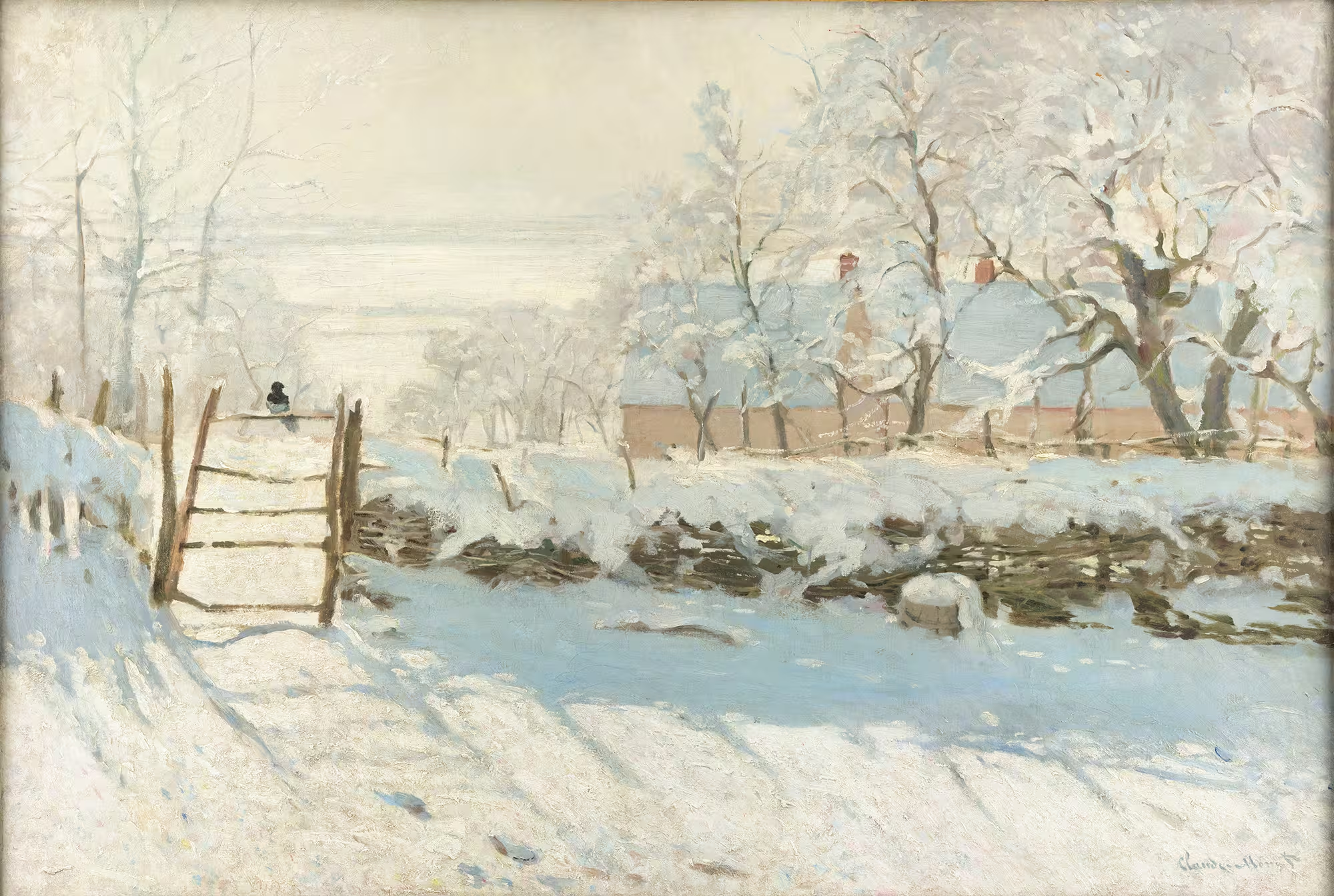
 《かささぎ》 1868-69年
Photo © GrandPalaisRmn (musée d’Orsay) / Adrien Didierjean / distributed by AMF
The Magpie, 1868-69
Photo © GrandPalaisRmn (musée d’Orsay) / Adrien Didierjean / distributed by AMF
モネは、1868年から翌年にかけての冬、雪の表現を研究しました。その中で最も知られているのが、この作品です。茨の垣根で画面が水平に仕切られ、その手前には厚い雪で覆われた野原が広がっています。野原に広がる陰や、雪の濃密な風合いを表すために、モネは青や薄紫、薔薇色を帯びたあらゆる白の色合いを用いました。画面の左側には構図のシンメトリーを崩している簡素な木の柵があり、その上にかささぎが一羽ぽつんと止まっているのが見えます。わたしたちの視線は、暗いトーンで描かれたかささぎに導かれていきます。一方、背景の農家の建物は暖かみのある色合いです。陽の光と長い陰が絵画全体を構成し、捉え難いもの――、例えば、なめらかで優しくふんわりとした雪、ほとんど親しみさえ感じさせる雪の姿を、雪の重さに枝をしならせる木々とともに表しています。
Monet studied the depiction of snow during the winter of 1868–69. This painting is the best-known example of his work from that period. The canvas is divided horizontally by a hedge, while stretching out in the foreground is a field covered in a thick blanket of snow. To depict the shadows that spread across the field and the dense texture of the snow, Monet employed varying shades of white tinged with blue, violet, and pink. On the left side of the canvas, a simple wooden gate breaks the symmetry of the composition, with a solitary magpie perched on it. The viewer’s gaze is drawn to the magpie, which is rendered in dark tones. In contrast, the farmhouse in the background is depicted in warm hues. The entire painting is composed of sunlight and long shadows. Here, Monet captured the elusive appearance of smooth, soft, fluffy snow, which has a vaguely familiar quality, along with trees whose branches are bending under the heavy weight of the snow.