
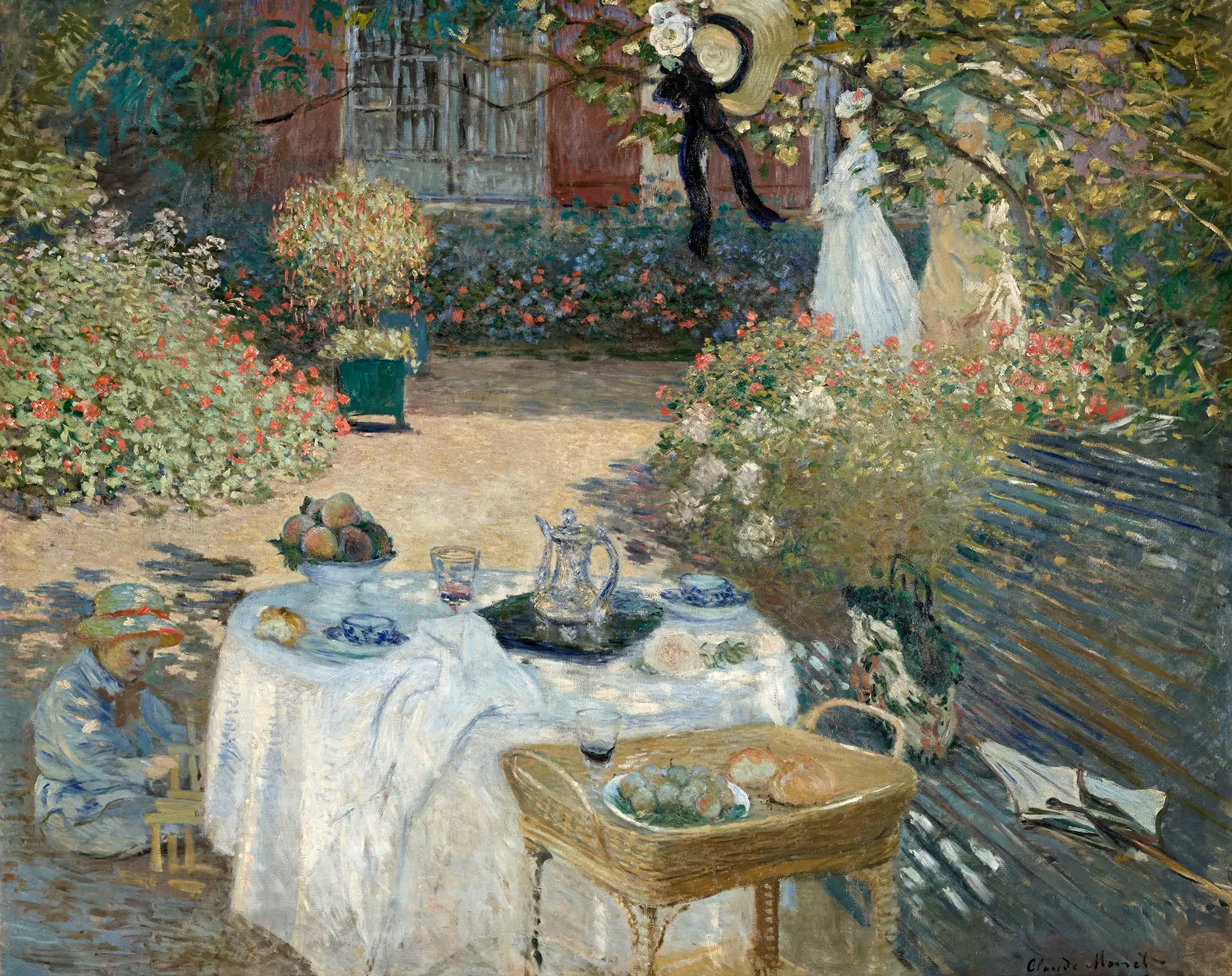
 《昼食》 1873年頃
Photo © GrandPalaisRmn (musée d’Orsay) / Franck Raux / distributed by AMF
The Luncheon, ca. 1873
Photo © GrandPalaisRmn (musée d’Orsay) / Franck Raux / distributed by AMF
この屋外の情景で、モネは装飾的才能を発揮させています。モネが暮らしたアルジャントゥイユの家での、家族の昼食が主題として描かれています。絵の中に見えるのは、残された果物、散らかった食器類、ベンチの上に置かれたままのいくつかの小物など、静物画のように描かれた食事の痕跡です。人物は画面の端に追いやられ、誰だか見分けられるのは、遊びに夢中になっているモネの幼い息子ジャンだけです。いくつかの花壇と家の外壁により、緻密で完全に閉じた構図が作られ、それが小径を光で満たす日射しをさらに色鮮やかに見せています。モネは光と影のゆらぎによる色調の鮮やかさを表現するために、非常に巧みな方法をとっています。この絵の親密な雰囲気ゆえ、この装飾画がナビ派のボナールやヴュイヤールに影響を与えたことが指摘されています。
In this outdoor scene, Monet fully utilizes his talent for decoration. The subject of this work is a family lunch at the artist’s home in Argenteuil. In the painting, we see traces of a meal, such as leftover fruit, scattered dishes, and several small items left on the bench, which are rendered in the manner of a still life. The human figures are pushed to the edges of the canvas, and the only recognizable person is Monet’s young son, Jean, who is absorbed in play. Several flower beds and the outside wall of the house form a dense, enclosed composition that accentuates the vivid colors bathed in the sunlight illuminating the path. In this work, Monet has employed an extremely skillful method to express the vibrancy of the color tones through the interplay of light and shade. The intimate atmosphere of this decorative painting led to speculation that it influenced Les Nabis artists such as Bonnard and Vuillard.