
5 6F Section 4 トルーヴィル、ロシュ・ノワールのホテル Hôtel des Roches Noires, Trouville 1870年 オルセー美術館蔵 1870, Musée d’Orsay
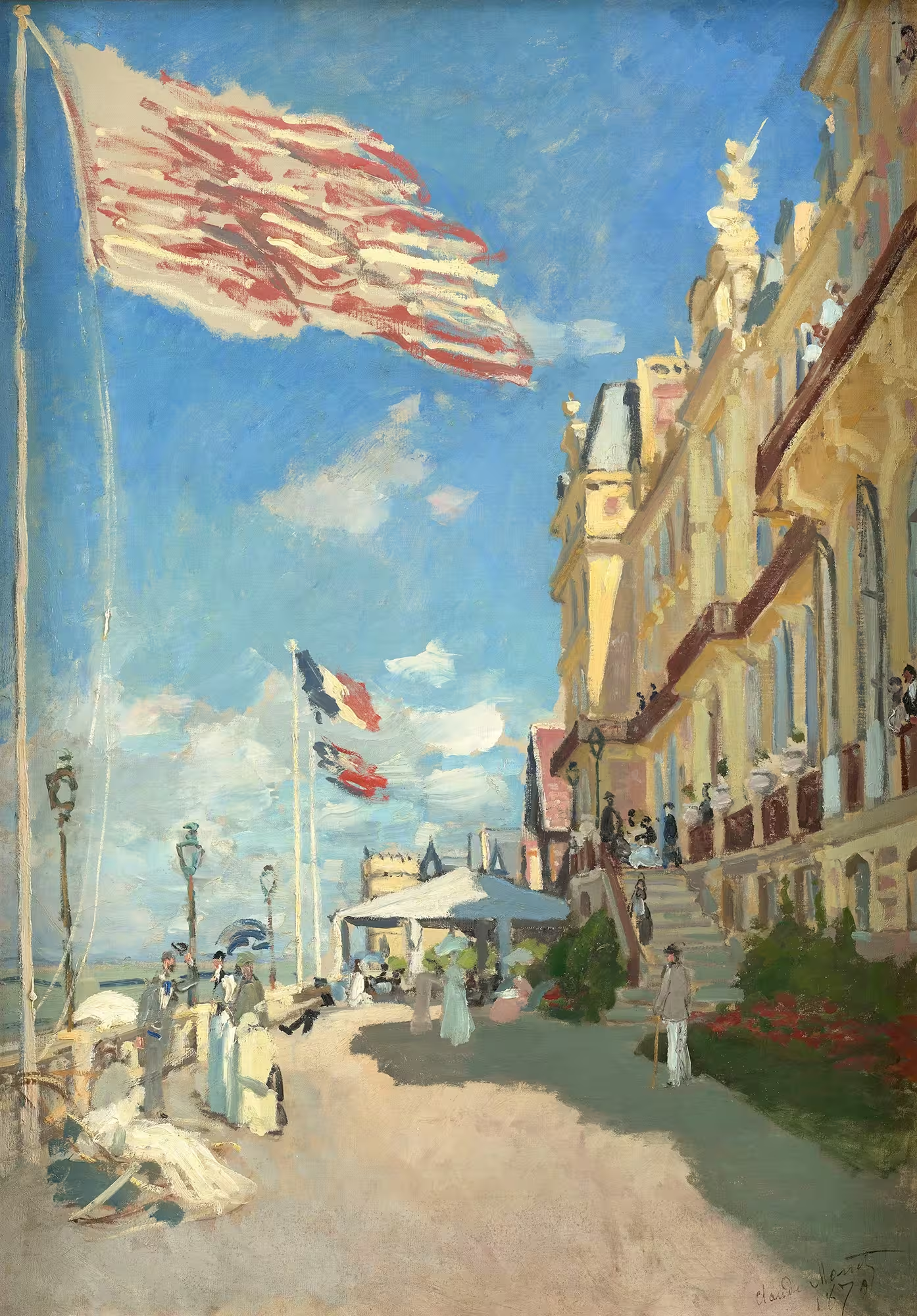 《トルーヴィル、ロシュ・ノワールのホテル》 1870年
Photo ©GrandPalaisRmn (musée d’Orsay) / Gabriel de Carvalho/ distributed by AMF
Hôtel des Roches Noires, Trouville, 1870
Photo ©GrandPalaisRmn (musée d’Orsay) / Gabriel de Carvalho/ distributed by AMF
1870年の夏、モネは新妻のカミーユと息子のジャンを伴ってトゥルーヴィルに滞在しました。ある晴れた日、モネはホテル、ロシュ・ノワールの壮麗なファサードを描こうと足を止め、上流社会の人々が海辺で社交する様子を画布に捉えました。モネは縦長の構図を選び、ホテルの長いファサードを斜めから描いています。建築自体を際立たせることなく、画面下の部分で散歩する人物像の安定感と、画面上の部分の旗竿に掲げられた色鮮やかな旗や風に流される雲の動きの対比に焦点を当てています。力強く太い筆致で雰囲気を表現し、風にはためく旗や素早く空を横切る雲を際立たせ、さらに前景の旗のストライプの赤と白、筆触の鮮やかさと即興性、モティーフから直接描かれたラフな人物像の描写、ホテルの足元に踊る影とまばゆい光など、鋭い対比を巧みに描きだしています。
During the summer of 1870, Monet was staying in Trouville with his wife Camille and their son Jean. On a fine, sunny day, Monet stopped to paint the magnificent façade of the Hôtel des Roches Noires. He filled his canvas with a scene of upper-class tourists socializing by the sea. For this painting, Monet chose a vertical format and depicted the hotel’s long façade from an angle. Rather than emphasizing the building itself, he focused on contrasting the solidity of the strolling figures in the lower part of the scene with the movement of the vibrantly colored flags fluttering on the flagpoles and the wind-blown clouds in the upper part. He captured the atmosphere with bold brushstrokes, emphasizing the flags fluttering in the wind and the swiftly moving clouds in the sky. He also skillfully created sharp contrasts, such as between the red and white stripes of the flag in the foreground, the vividness and spontaneity of the brushwork, the rough depiction of figures drawn directly from the motifs, and the sharp contrast between the dancing shadows and the bright sunlight bathing the terrace in front of the hotel.